The right amount of custom stretch wrap to order comes from your own pallet volume, not a guess: count outbound pallets per week, note how many wraps each load needs, match hand or machine rolls to each station, then add a buffer for the time a reorder takes. Customized Stretch Wrap starts at a minimum of 12 rolls, so a small test is always possible.
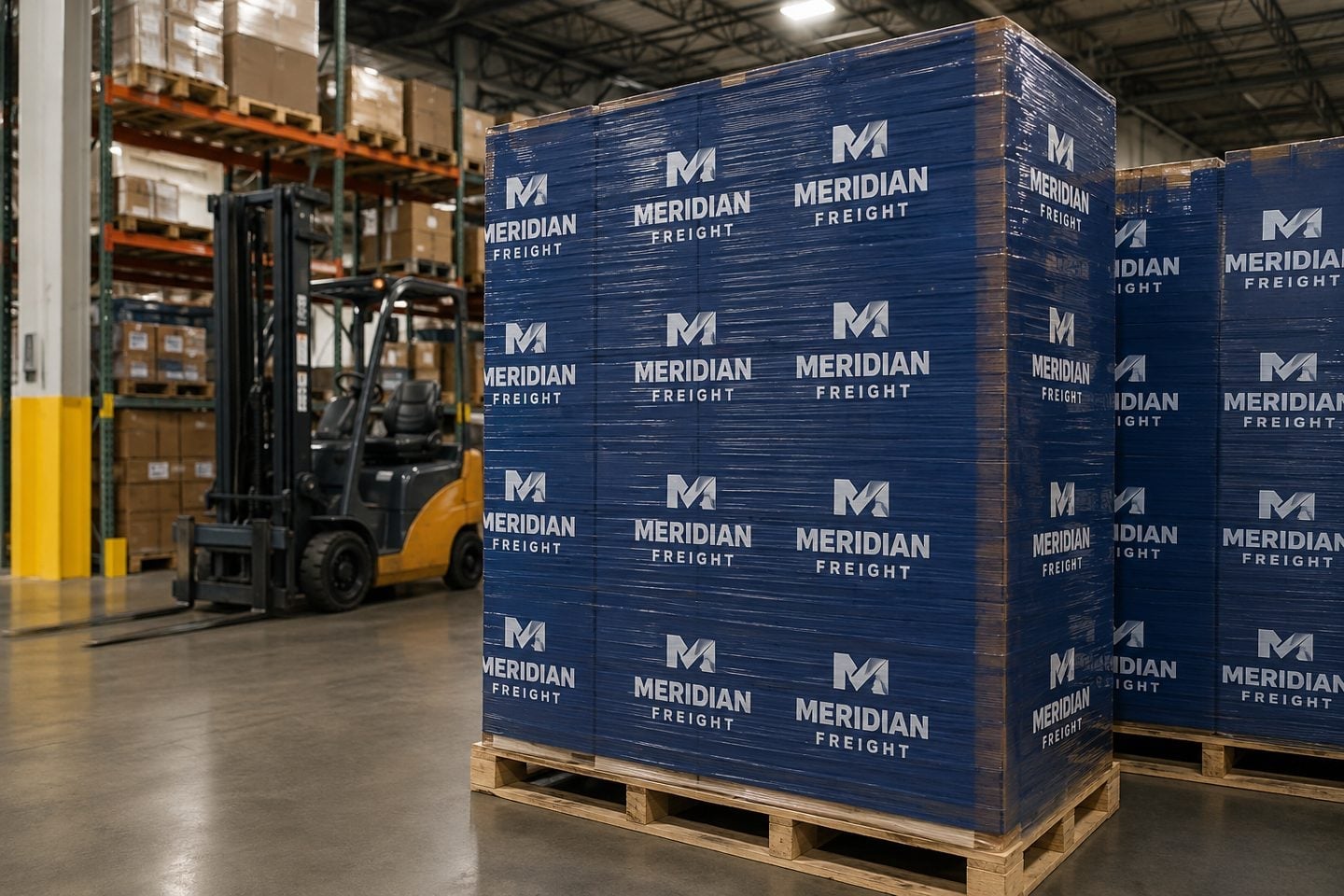
- Customized Stretch Wrap orders start at a minimum of 12 rolls.
- A free mockup comes back within 24 hours of sending your logo.
- Standard production runs about 2 weeks, with faster turnaround available through express shipping.
- Hand and machine rolls can be planned as separate lines under one approved design.
- Your reorder point should cover the full reorder window, not just production time.
How do I figure out how much custom stretch wrap my operation actually uses?
The fastest way to size a custom stretch wrap order is to measure your current plain-film usage for a few normal weeks. Your existing film consumption is the most honest data you have, because it already reflects your pallet sizes, your load shapes and the habits of the people wrapping.
Start with three numbers you can pull from receiving records, purchase orders or a simple tally sheet at each wrap station:
- Rolls consumed per week of plain film, split by hand and machine.
- Outbound pallets per week, ideally split by customer, lane or product family.
- Pallets per roll, which you get by dividing the first number by the second for each station.
Pallets per roll is the number that matters. Once you know it, planning printed film becomes simple multiplication: expected pallets for the period divided by pallets per roll. If your team has never tracked it, ask the shift lead to mark the start and end of one roll on a clipboard. One honest week beats any rule of thumb, and it costs nothing to collect.
Does printed stretch wrap get used up faster than plain film?
Printed stretch wrap usually runs at about the same rate as the plain film it replaces when the gauge and roll type stay the same. The ink sits on the surface of the film, so your wrap pattern, tension settings and number of revolutions drive consumption far more than the print does.
Usage only shifts when something else changes at the same time. Watch for these situations while planning:
- Switching gauge. Moving to a different film thickness alongside the branding change will change how many pallets each roll covers. Review the custom stretch wrap gauge options before you lock your plan.
- Switching to pre-stretched film. Pre-stretched hand film behaves differently from conventional hand rolls, so track it as its own line.
- Extra top wraps for visibility. Some teams add a band at eye level so the logo reads clearly. That is a deliberate choice, and it belongs in your count.
If none of these apply, you can carry your plain-film pallets-per-roll number straight into your printed order plan.
Should hand rolls and machine rolls be planned separately?
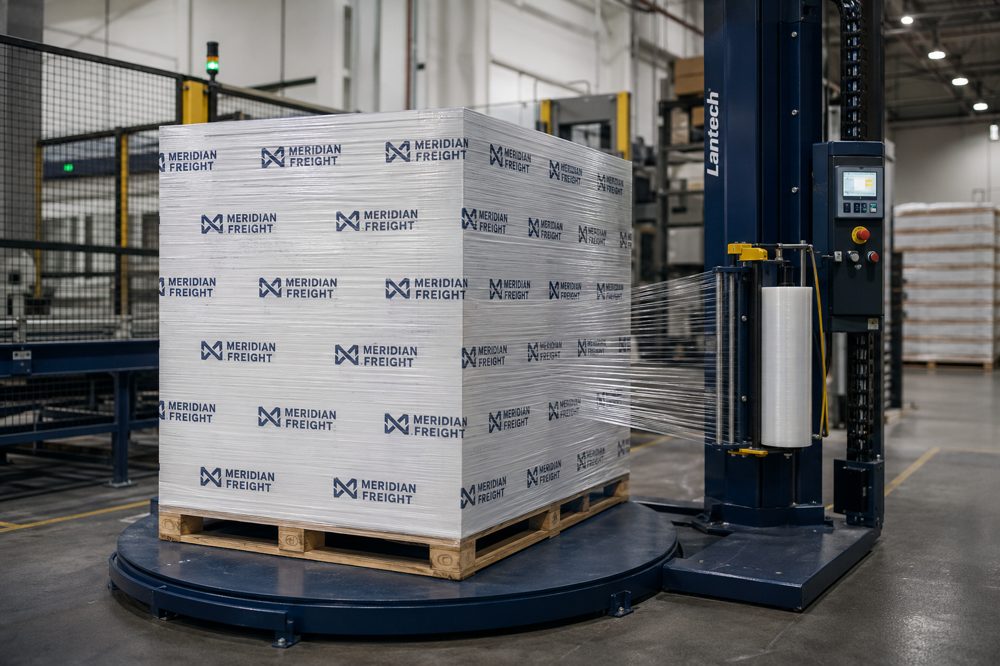
Yes. Hand rolls and machine rolls should always be planned as separate lines, because they are consumed by different stations at different rates and they cannot substitute for each other on the floor. Running short of one while the other sits on the shelf is one of the most common planning gaps.
A typical split looks like this:
| Roll type | Where it gets used | How to count it |
|---|---|---|
| Machine stretch wrap | Turntable and rotary-arm wrappers on main outbound lines | Pallets through each wrapper divided by pallets per roll |
| Hand stretch wrap | Mixed loads, small shipments, rework and dock touch-ups | Rolls per station per week from your tally |
| Bundling film | Long parts, small bundles and unitizing cartons | Bundles per week, tracked as its own line |
Customized Stretch Wrap can put the same approved design on more than one roll type, so planning separate lines does not mean managing separate artwork. It simply keeps each station stocked with the film it actually runs.
How much buffer stock of custom stretch wrap should I keep?
Your buffer of custom stretch wrap should cover at least the full time between noticing you need more film and having new rolls on the dock. Printed film is made to order, so you cannot run to a distributor for a same-day case the way you can with generic stock.
Think of the reorder window in three parts:
- Decision time. How long it takes someone to notice the shelf is getting low, raise the request and get it approved internally.
- Production time. Standard turnaround at Customized Stretch Wrap is about 2 weeks for a repeat of an approved design, with faster turnaround available through express shipping.
- Receiving time. Delivery, dock scheduling and putaway in your building.
Add those together and multiply by your weekly roll usage for each roll type. That figure is your reorder point. Then add a cushion for your busiest weeks, because peak season is exactly when nobody has time to chase film. Teams with steady volume can keep the cushion modest. Teams with lumpy, seasonal or promotional volume should hold more.
What is a sensible first order if I have never used printed film before?
A sensible first order of custom stretch wrap is small enough to test, large enough to give a real read on the floor. The minimum at Customized Stretch Wrap is 12 rolls, which lets one line or one customer lane try printed film without committing the whole building.
A practical first-order approach:
- Pick one lane. Choose the outbound flow where branding matters most, such as a key retail customer or your highest-visibility shipments.
- Order for that lane only. Use the pallets-per-roll math above for that lane, with a buffer covering the reorder window.
- Run it for a full cycle. Let the film run through a normal stretch of shipping so operators and receivers both see it.
- Collect feedback. Ask wrap operators about handling and ask customers whether the logo reads well on arrival.
Once that lane is proven, expand to the next one with real data behind the plan. The mockup, which comes back within 24 hours and is free, lets you settle the design before any of this begins, and you pay nothing until you approve it.
How do I plan quantities across several customers, sites or designs?
When custom stretch wrap is split across several designs, sites or customers, plan each one as its own line with its own pallets-per-roll figure and reorder point. Combining them into a single number hides the line that is about to run out.
A simple planning sheet with one row per line works well. For each row, record:
- The design or customer the film belongs to.
- The roll type: hand, machine, bundling, tinted or UVI outdoor film.
- The site or dock where the rolls are stored.
- Weekly usage, rolls on hand and the reorder point.
Review the sheet on a fixed day each week. Any row at or below its reorder point gets a request that day. If a design or color only supports a short campaign, such as a seasonal program or a product launch, plan it to the end date rather than to a buffer, so you are not left holding film for a campaign that has ended.
When does it make sense to order more custom stretch wrap at once?
Ordering more custom stretch wrap at once makes sense when your volume is steady, your design is settled and you have dry, clean storage space. Larger runs reduce how often someone has to place an order, and fewer orders means fewer chances to miss a reorder point.
Hold back on a larger run when any of these are true:
- Your logo, tagline or contact details may change in the coming months.
- The film is tied to one customer contract that could end or be renegotiated.
- You have limited floor or rack space and rolls would end up stored near heat, sunlight or forklift traffic.
- You are still testing gauge or roll type and expect to adjust.
Price at volume is a quote question rather than a planning rule. The cost of a custom stretch wrap order depends on roll type, gauge, ink colors, quantity and shipping, so the most useful step is to request a quote at two or three quantity levels and compare them against your storage and cash-flow limits. The quote form is the quickest way to get those side by side.
What is the step-by-step process for turning usage data into an order?
Turning usage data into a custom stretch wrap order follows the same steps every time, whether it is your first order or your tenth. Keeping the steps consistent makes it easy to hand the job to whoever covers purchasing when you are out.
- Pull pallets per week and pallets per roll for each line.
- Choose the planning period: the next quarter, the next season or a campaign end date.
- Multiply expected pallets by the roll ratio for each line to get rolls needed.
- Add a buffer that covers the full reorder window.
- Send your logo for a free mockup, returned within 24 hours, and request revisions until it is right.
- Approve the design and confirm quantities per roll type.
- Record the reorder point for each line on your planning sheet.
The how it works page walks through the ordering side in more detail, from artwork to delivery.
Frequently asked questions
How do I convert my plain film usage into a custom stretch wrap order quantity?
Custom stretch wrap quantities come straight from your plain-film records. Divide the rolls you used over a few normal weeks by the pallets you shipped in the same weeks to get pallets per roll for each station. Then divide the pallets you expect to ship in your planning period by that ratio. Customized Stretch Wrap can then quote the result by roll type.
Does adding a printed logo change how many pallets one roll of stretch wrap covers?
Printed stretch wrap usually covers about the same number of pallets as the plain film it replaces, as long as the gauge and roll type stay the same. The ink sits on the film surface, so wrap pattern, tension and revolutions drive usage. Coverage changes only when you also change thickness, move to pre-stretched film or add extra wraps for logo visibility.
How should a small business with low pallet volume plan a custom stretch wrap order?
Custom stretch wrap still works for low-volume shippers because the minimum at Customized Stretch Wrap is 12 rolls. Track how many rolls a typical month uses, decide how long you want the order to last, and keep the design simple enough to stay current for that whole period. Hand rolls are usually the best fit when pallets are wrapped at the dock without a machine.
What is a reorder point for printed stretch wrap and how do I set one?
A reorder point for printed stretch wrap is the stock level that triggers a new order. Set it by adding internal approval time, production time of about 2 weeks and receiving time, then multiplying that window by weekly roll usage for each roll type. Add a cushion for peak weeks. When rolls on hand reach that level, place the order that day.
Can one custom stretch wrap design be split between hand rolls and machine rolls in the same order?
Custom stretch wrap from Customized Stretch Wrap can carry one approved design across more than one roll type. You plan hand rolls and machine rolls as separate quantity lines because different stations use them at different rates, but the artwork, mockup and approval stay shared. That keeps branding consistent at the wrapper and at the dock without managing separate files.
How do seasonal peaks affect how much custom stretch wrap to keep on hand?
Custom stretch wrap usage rises with pallet volume, so peak seasons need a larger cushion above your normal reorder point. Look back at last year's busiest weeks and plan against that pace rather than your average. Place the peak order early enough that standard turnaround of about 2 weeks finishes well before volume climbs, leaving express shipping as a backup, not the plan.
Should every dock or building keep its own stock of printed stretch wrap?
Printed stretch wrap is easiest to manage when each dock or building holding stock has its own usage figure and reorder point. A central store works when transfers are quick and reliable. If moving rolls between sites takes days, give each site its own line on the planning sheet. Customized Stretch Wrap can quote quantities for each location so nobody borrows film from another site.
What is the risk of ordering too much custom stretch wrap at one time?
Custom stretch wrap ordered far beyond real usage ties up cash and storage space, and the printed design can go out of date if your logo, contact details or customer relationship changes. Rolls kept too long in poor conditions can also be damaged. Plan around a period where your design and volume are predictable, and quote a few quantity levels before choosing.
Can I get quotes at several quantities before deciding how much stretch wrap to buy?
Customized Stretch Wrap can quote custom stretch wrap at more than one quantity on the same request, which makes the decision easier. Price depends on roll type, gauge, ink colors, quantity and shipping, so comparing two or three levels side by side shows how volume affects your order. Use the quote form and list each level you want priced.
How do I plan custom stretch wrap for a design I will only use for a limited time?
Custom stretch wrap for a limited-time design should be planned to the end date, not to a standing buffer. Estimate the pallets that will ship under that design, divide by pallets per roll and add only a small margin. When the program winds down, switch back to your standard design so the short-run film is fully used rather than left on the shelf.
Who should own the planning sheet for printed pallet film inside a company?
Printed pallet film planning works best with one named owner, usually a warehouse lead or purchasing coordinator who sees both usage and orders. That person checks rolls on hand against each reorder point on a fixed day every week. A backup should know the steps too, so custom stretch wrap reorders keep moving during vacations and busy seasons.
Get a free mockup for your stretch wrap
Send your logo or idea and the quantity you have in mind. Customized Stretch Wrap returns a free mockup within 24 hours, you approve the design before anything is produced, and standard turnaround is about two weeks with faster options available. Get a custom quote.