Cast and blown stretch film both wrap a pallet, both stretch, and both hold a load together in transit. But they are made by different extrusion processes, and those processes give each film a distinct personality on the loading dock. Choosing between them is not about which is universally better. It is about matching the film’s strengths to the loads you actually ship, the equipment you run, and the way your product gets handled downstream.
The short version: cast film is the clear, quiet, budget-friendly generalist, while blown film is the tougher, higher-retention specialist that costs more and runs louder. The rest of this guide walks through where those differences come from and how to weigh them for your operation.
How each film is made
Cast film is produced by cast extrusion. Molten resin is spread onto a chilled roller that cools it almost instantly, which produces a film with very consistent gauge and high optical clarity. Because the process is fast and efficient, cast film generally carries a lower cost per roll and unwinds quietly off the roll, a small detail that matters when hand wrappers pull hundreds of rolls a week.
Blown film is made by blown extrusion. The resin is forced through a circular die and inflated into a bubble that cools in the air more slowly. That slower, molecular-alignment-heavy cooling is what gives blown film its toughness, its high load-holding force, and its characteristically hazy, cloudy look. The same process makes it noisier to unwind and more expensive to produce.
The properties that actually differ
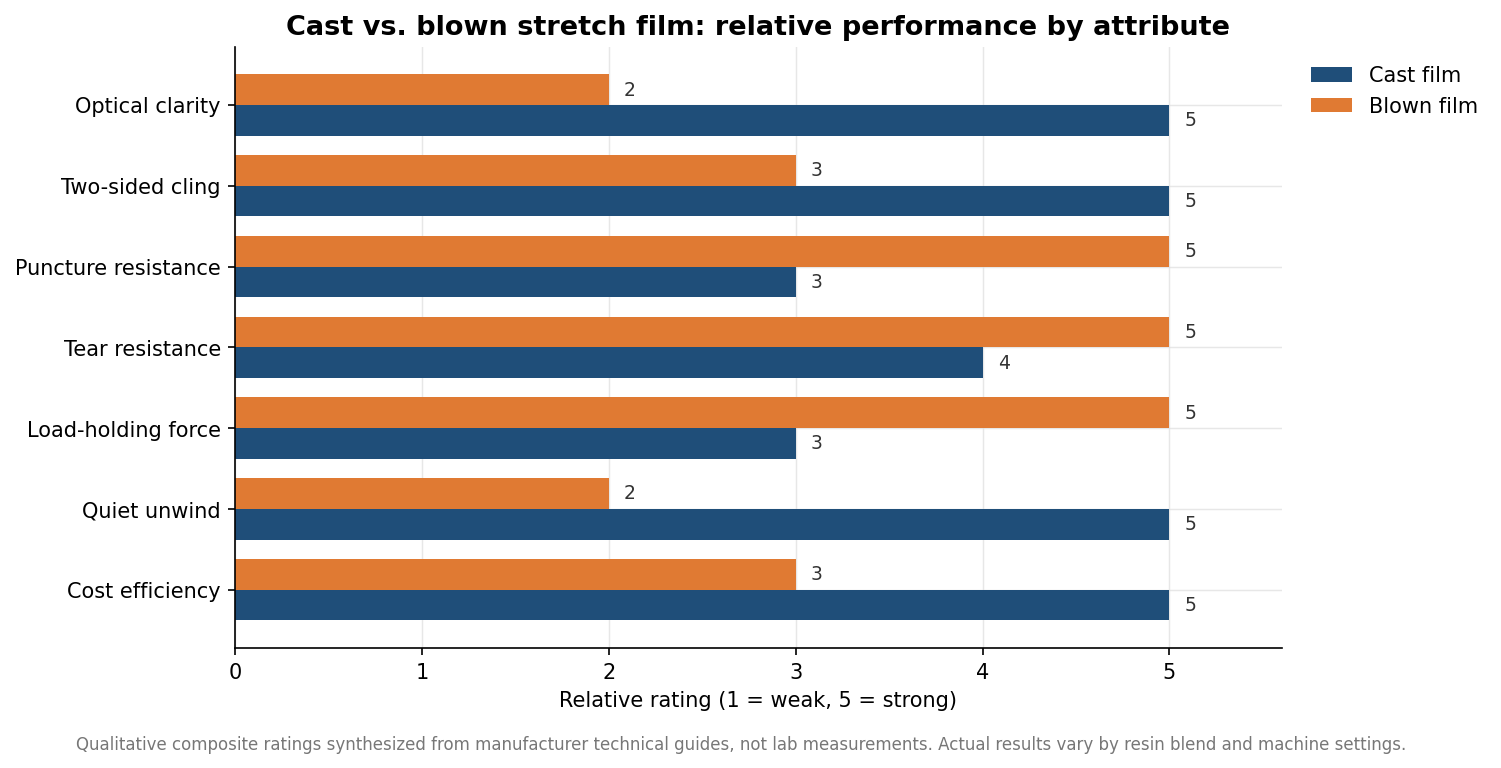
Clarity and cling favor cast film. Its glossy transparency makes it easy to read barcodes and shipping labels through the wrap, and its strong two-sided cling holds a load without excessive wrapping. Blown film is cloudier and typically offers cling on one side only, which some operations actually prefer because wrapped pallets do not stick to each other in storage.
Puncture and tear resistance favor blown film. If you ship engine parts, lumber, machined components, or anything with sharp corners, blown film resists the punctures and propagating tears that would cut through cast film of the same thickness. Blown film also has higher load-holding force, meaning it keeps applying inward pressure over a long truck ride rather than relaxing.
Cost and noise favor cast film. For comparable gauge, cast film usually sits below blown on price, and it releases quietly. Blown film commands a premium and produces a loud tearing sound on every wrap, which is a genuine ergonomic consideration in a manual wrapping station staffed all day.
Reading gauge the right way
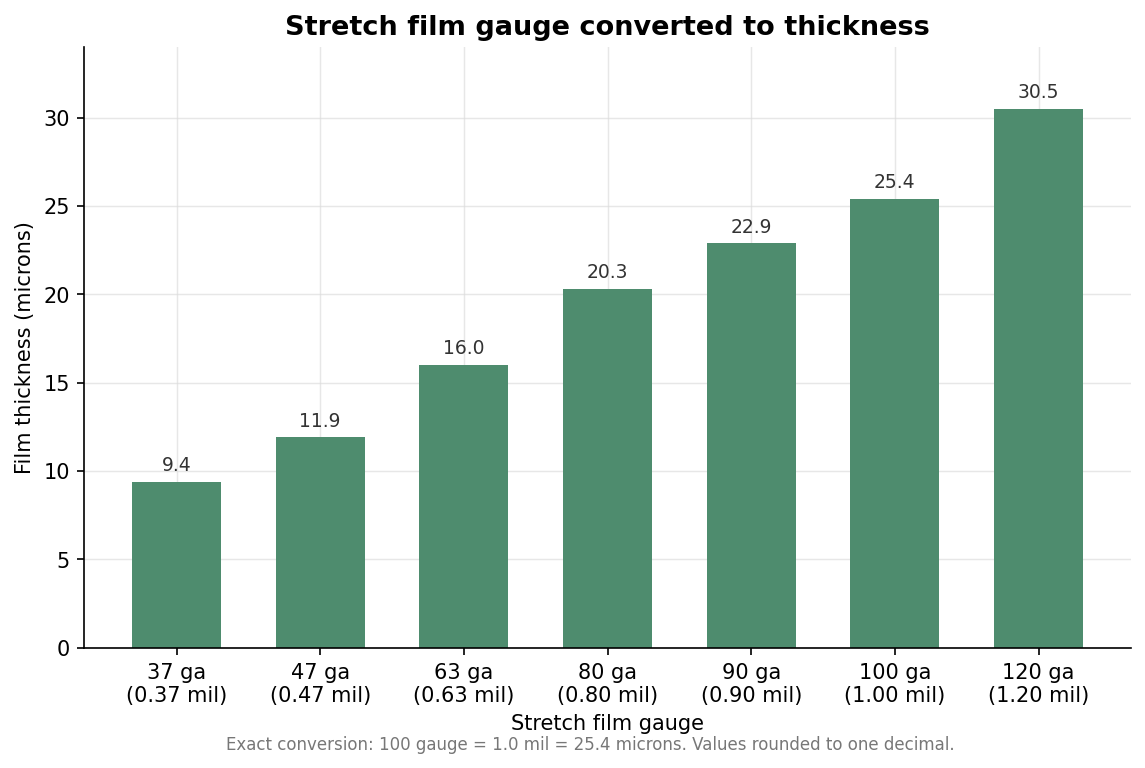
Thickness is where buyers most often overspend. In the United States, film thickness is quoted in gauge, and the conversion is fixed: 100 gauge equals 1.0 mil, which equals 25.4 microns. A 80-gauge film is 0.80 mil, or about 20.3 microns. The chart below shows the common gauges converted to microns so you can compare a domestic spec sheet against a metric one without guessing.
Gauge interacts with film type. Because blown film carries more load at a given thickness, some operations can step down a gauge or two when they switch from cast to blown and still hold the same load, offsetting part of blown film’s higher unit price. The only reliable way to confirm that is a containment-force test on your own pallets rather than a spec-sheet comparison.
Pre-stretch and machine wrapping
Modern powered pre-stretch wrappers elongate the film before it reaches the pallet, and this is where cast film’s economics shine. Cast film commonly pre-stretches in the range of 200 to 300 percent, so one pound of film covers far more surface area than an unstretched roll would suggest. Blown film generally pre-stretches less but starts from a higher baseline strength. When you compare films, compare the wrapped cost per pallet after pre-stretch, not the sticker price per roll, because a cheaper roll that stretches less can end up costing more per load.
For guidance on selecting and testing film, ASTM D4649, the standard guide for the selection and use of stretch wrap films, is the reference most packaging engineers point to. It frames the decision around load containment force and film performance rather than thickness alone, which is exactly the mindset that keeps you from over-buying.
Which one should you order
Choose cast film when your loads are uniform and reasonably light to medium, when you need clear visibility of labels through the wrap, when quiet operation matters, or when unit cost is the deciding factor. It is the sensible default for boxed goods, palletized consumer products, and most general warehousing where loads are stable and handling is routine.
Choose blown film when loads are heavy, sharp-edged, or irregular, when you need maximum holding force for a long or rough transit, or when one-sided cling is a storage advantage. The premium pays for itself when a failed wrap means a toppled or damaged load.
If your operation runs a mix of load types, there is no rule against stocking both and matching the film to the pallet. Many well-run docks do exactly that, matching cast film to clean boxed loads and reserving blown film for the heavy or sharp shipments that need it, and it is often cheaper over a year than forcing every shipment onto a single compromise film. Whichever you standardize on, the wrap is also prime branding real estate, so specifying a custom-printed film in your chosen construction lets the same roll protect the load and carry your name through the supply chain.
Leave a Reply